Home Remedies: Bee Sting
We have had a yucky experience this weekend with a bee nest in our yard.
My husband was stung while mowing and weeding and then Matthew was stung. We’ve treated the area and successfully removed the nest, but the stings hurt. My husband finished mowing the yard before taking care of his sting. Relief for him has not been as quick as it has been for Matthew and I am certain it has a lot to do with him waiting. Men.
The first thing you need to do is quickly get the stinger out. Use your fingers or tweezers. Then immediately do one of the following treatments.
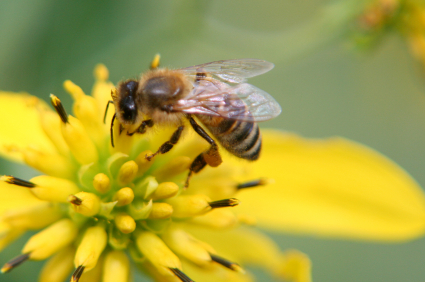
Bee Sting Treatment:
- Baking Soda Paste– I keep my baking soda in the fridge. Making a thick paste with the cold baking soda and cold water brings great relief to the sting spot. This is my first go to plan for a bee sting.
- Onion– there are enzymes in an onion that help with inflammation. Cut an onion and rub it on the sting spot. Stinky, but it is said to work.
- Ice– always helps with the swelling and pain. We do ice over the baking soda paste. Nicky is our go-to-guy for making ice packs when someone gets hurt in our home. He always puts ice cubes in a zippy bag and he adds cold fridge water, from the dispenser in our fridge door, to the bag before sealing it up. He is only six but he always tells us the water helps make the ice super cold and always helps make him feel better. He has been making these ‘wound bags’ for his brothers since he was about four. I used to think he just liked playing with the ice and water dispenser, but all the kids want Nicky to make their ice bags. We trust his instruct and his reasoning makes sense.
- Apple Cider Vinegar– soak the stung area in apple cider vinegar. The acid in the vinegar helps to neutralize the venom. You could step it up a notch and make an apple cider vinegar and baking soda paste.
- Tea Tree Oil– my husband in a huge believer in the benefits of tea tree oil and it’s ability to fight off infection. Apply a couple of dabs of the oil to the sting spot and apply a bandage.
- Aloe Vera– great overall item to keep in your home for many different reasons. For bee stings it is great for soothing the itch and overall irritation.
- Witch Hazel– apply with a cotton ball for immediate pain and swelling relief.
What do you put on a bee sting?
Thanks for sharing the treatment process. I have a huge nest near my house and I always feel tensed about my children. How did you manage to remove the nest?
Janice- my husband just used an over-the-counter wasp and bee spray. Then removed the nest. This one was in the shrubs by our front door as well. 🙁
Crystal,
This is really good information, thank you for sharing. I have absolutely no idea how to treat a bee sting. I knew you had to take the stinger out but as far as treatment goes, no clue. All this info is surely going to be very helpful should it ever happen to me or one of my loved ones. So again, thank you for sharing. And I am so sorry your hubby and son had to go trough this. I hope they’re feeling better. Keep up the good work, I love your blog and look forward to it. Have a great day! 🙂
Gisela- I’ve been using a baking soda paste and ice pack on bee stings for a long time. Until I looked up home remedies for bee stings, I had no idea most of those items would work on a bee sting.
To remove the bee nest my husband just used an over-the-counter bee spray and then bagged up the nest (which still had larva in it) and tossed it in the trash.
I am so glad you found all of this info useful. Thanks so much for reading and taking the time to leave your thoughts.
This is good to know, thanks for sharing! I knew to pull out the stinger but never really did anything more than just using some ice to numb it a bit. I’d love it if you’d share this over at my current link party so everyone can see these tips! http://practicallyfunctional.net/2012/06/the-fun-in-functional-link-party-2/
I heard about baking soda for bee stings and we have great success with it. But I have not heard about all these other ideas! great post. (visiting from WFMW)
Be careful when removing the stinger. If you squeeze the venom sac, it will make things much worse. Try scraping it out with a nail file or similar object.
I have had good luck treating hornet stings with lavendar essential oil.
Tiffany- I have read that lavender oil is something you can use on a bee sting, but I did not understand the purpose. Is it to help sooth the area, to address swelling or to fight off the venom? I would love for you to elaborate.
Crystal,
According to The Complete Book of Essential Oils & Aromatherapy by Valerie Ann Worwood, “Lavender oil is a natural antibiotic, antiseptic, antidepressant, sedative, and detoxifier which promotes healing and prevents scarring, and also stimulates the immune system and contributes to the healing process by stimulating the cells of a wound to regenerate more quickly.”
You can also use a poultice made from the leaves of the plantain, Plantago major (not the banana-looking plantains). It neutralizes poison and is therefore effective for insect bites/stings.
Crystal, I wish I read this list about 3 weeks ago before I got my two really bad wasp stings on my foot and leg! The foot sting was the worst and it aggravated it even worse when I ran 3 miles the next day. I developed athletes foot plus the itch from the sting and it was a pretty miserable week or so afterwards. I tried most of these remedies along with toothpaste, melaleuca oil, hydro cortisone cream and others. But what worked the best for me was the apple cider vinegar. Since I couldn’t always walk around with my foot in a bucket, a neighbor brought me some essential oil blends – mix of lavander and others. I kept dabbing that on the affected areas seemed to work well for when I had to ditch the bucket! 🙂 I also numbed my foot a few times with ice, which helped me at least get to sleep…But not fun! Glad you’re sharing this list and hopefully someone else will read it BEFORE they get stung! 🙂
Heather- that is awful! Hope you’re feeling better.
The apple cider vinegar is something I have not tried yet, but after reading more about it I can see why it is so effective. If we ever get another sting, I am certainly trying it.
Thanks for taking the time to share your experience.
Great tips, pinned for future reference..
GORGEOUS! Crossing my fingers you’ll share at my party! Saturdays at Seven!
XO, Aimee
Thank you! I love ideas like this. Thanks for sharing on our “Strut Your Stuff Saturday”. Hope you come back next week. -The Sisters
Great to have this on hand this time of year. Thanks for linking up to Share the Love Wednesday!
Mary